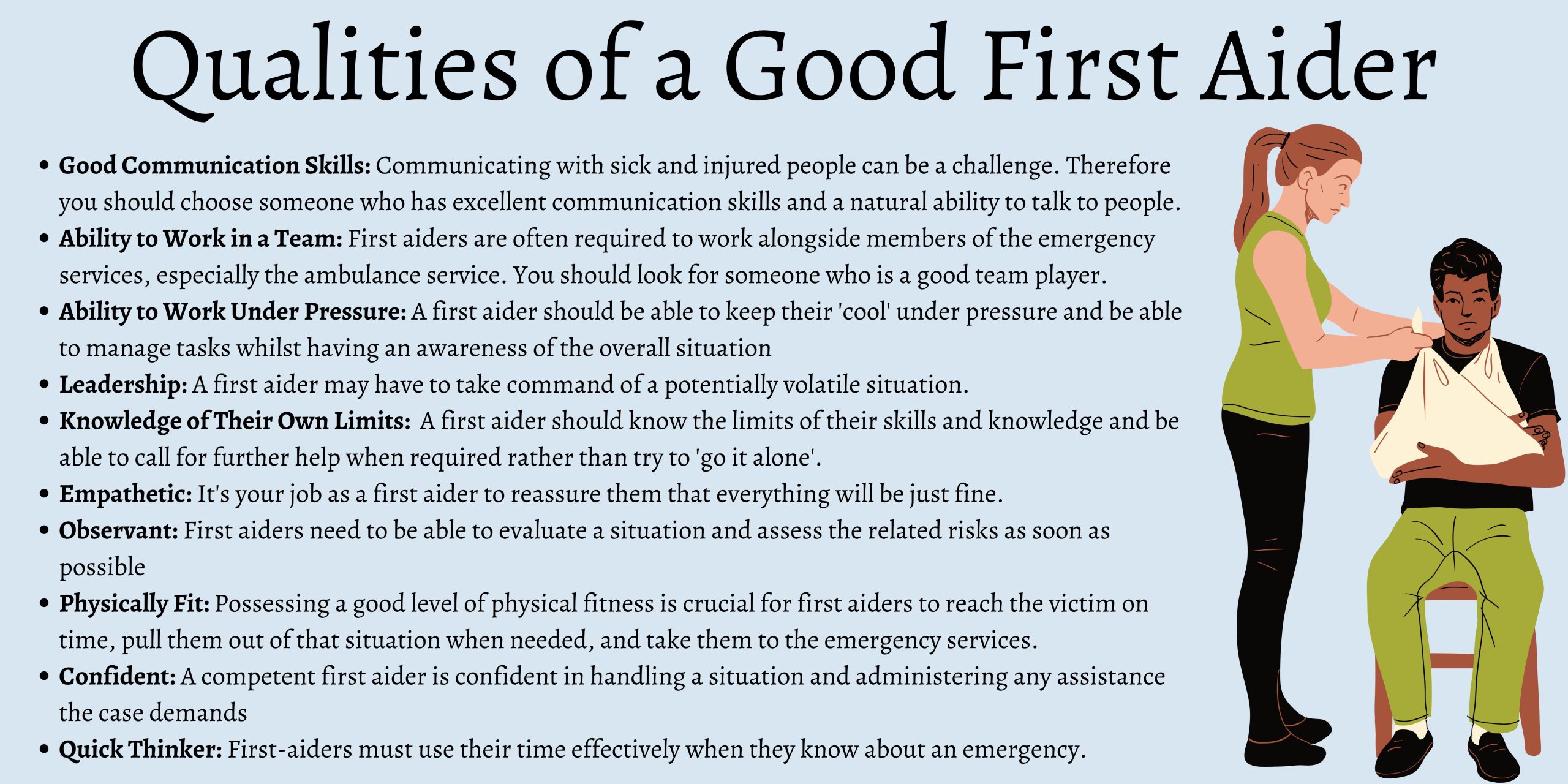
A first aider is an individual equipped with a unique set of qualities that can make a life-saving difference in critical situations. From quick thinking to effective communication, the qualities of a first aider are essential in providing immediate care and support. Responding promptly and remaining calm under pressure are integral to being a reliable first aider. Let’s delve deeper into the key qualities that define a competent and compassionate first aider.

Qualities of a First Aider
Being a first aider is an important role that requires specific qualities to handle emergency situations effectively. Whether it’s a minor injury or a life-threatening crisis, the ability to stay calm, act swiftly, and provide appropriate care can make all the difference. In this blog post, we will explore the essential qualities of a first aider and how they contribute to helping those in need.
The Importance of First Aid
Before diving into the qualities of a first aider, it’s crucial to understand the significance of first aid itself. First aid is the initial assistance or treatment given to someone who has been injured or taken ill before professional medical help arrives. It can help prevent conditions from worsening, reduce pain and suffering, and even save lives. By having individuals with the right qualities trained in first aid, communities can become safer and more prepared to handle emergencies.
Empathy and Compassion
One of the most critical qualities of a first aider is empathy and compassion. When providing first aid, it’s essential to understand the pain and fear that the injured person may be experiencing. By showing empathy, a first aider can create a sense of trust and reassurance, making the injured person feel more at ease. Compassion enables the first aider to connect with the individual on a human level, providing not just physical care but emotional support as well.
Example: Talking to the Injured Person
Imagine you come across someone who has fallen and injured their arm. As a first aider, your empathy and compassion will guide you to approach the person calmly, assess their condition, and reassure them that help is on the way. By showing kindness and understanding, you can help alleviate their distress and build rapport, which is crucial in emergency situations.
Quick Thinking and Decision Making
In emergencies, time is of the essence, and a first aider must be able to think quickly and make decisions promptly. Whether it’s determining the severity of an injury, prioritizing care, or deciding when to call for professional help, the ability to think on your feet is vital. Quick thinking also involves staying calm under pressure, assessing the situation accurately, and taking the necessary actions without delay.
Example: Assessing a Burn Injury
If someone sustains a burn injury, quick thinking is crucial. As a first aider, you need to assess the burn’s severity, remove any clothing or jewelry from the affected area, and cool the burn with running water. Making the decision to seek medical help if the burn is severe is also part of quick decision-making in this scenario.
Knowledge and Skills
Another essential quality of a first aider is having the necessary knowledge and skills to provide effective care. This includes understanding basic first aid techniques, knowing how to use first aid supplies such as bandages and disinfectants, and being aware of when to escalate the situation to medical professionals. Continuous learning and practice are key to maintaining and improving these skills over time.
Example: Performing CPR
Cardiopulmonary resuscitation (CPR) is a life-saving skill that all first aiders should be proficient in. By knowing the correct chest compression and rescue breathing techniques, a first aider can significantly increase the chances of survival for someone experiencing cardiac arrest. Regular CPR training and certification help keep these skills sharp and up to date.
Clear Communication
Effective communication is another vital quality of a first aider. Being able to convey information clearly and concisely to both the injured person and emergency services is essential for a successful outcome. Clear communication helps ensure that the right help arrives promptly, instructions are followed accurately, and everyone involved remains informed and coordinated throughout the emergency.
Example: Calling Emergency Services
When calling emergency services, a first aider should communicate the nature of the injury or illness, the location of the incident, and any other relevant details clearly and calmly. Providing accurate information allows the dispatcher to dispatch the appropriate help promptly, potentially saving valuable time in critical situations.
Adaptability and Resourcefulness
Emergency situations can be unpredictable, and a first aider must be adaptable and resourceful in handling challenges that may arise. Whether it’s improvising with available materials to create a makeshift bandage or modifying first aid techniques to suit the situation, being resourceful can make a significant difference in providing effective care.
Example: Improvising a Splint
If someone sustains a suspected broken bone, a first aider may need to improvise a splint using materials like cardboard or sticks to immobilize the injured limb. By being resourceful and adapting to the circumstances, the first aider can help prevent further injury and provide temporary support until professional medical help arrives.
Stamina and Resilience
Emergency situations can be physically and emotionally demanding, requiring a first aider to have stamina and resilience. From performing continuous CPR to staying focused during high-stress incidents, maintaining physical and mental endurance is crucial. Building resilience through training, practice, and self-care is essential for first aiders to sustain their ability to help others effectively.
Example: Providing Prolonged Care
In situations where professional help may be delayed, such as during natural disasters or remote locations, a first aider may need to provide prolonged care to the injured person. This can test both physical stamina and emotional resilience, highlighting the importance of being prepared for challenging circumstances.
Teamwork and Collaboration
While first aiders often work independently during emergencies, the ability to collaborate with others, including bystanders, emergency responders, and healthcare professionals, is vital. Teamwork skills such as leadership, coordination, and mutual support can enhance the overall response to an emergency and ensure that the injured person receives comprehensive care.
Example: Coordinating with Emergency Responders
When professional help arrives at the scene, a first aider may need to effectively communicate the actions taken, the condition of the injured person, and any other pertinent information to ensure a seamless transition of care. By working collaboratively with emergency responders, the first aider can contribute to a coordinated and efficient response.
In Conclusion
In conclusion, the qualities of a first aider play a crucial role in providing timely and effective assistance during emergencies. From empathy and quick thinking to knowledge and resilience, each quality contributes to the overall ability of a first aider to help those in need. By developing and honing these qualities through training, practice, and a commitment to helping others, individuals can become valuable assets in their communities, making a positive impact in times of crisis.
As you continue your journey in learning about first aid, remember that anyone can acquire these qualities with dedication and effort. Whether you’re a student, a parent, or a community member, the ability to provide first aid can make a significant difference in someone’s life. Stay curious, stay prepared, and most importantly, stay safe.
Qualities Of A Good First Aider – Science
Frequently Asked Questions
What are the key qualities of a first aider?
First aiders should possess strong communication skills to effectively assess and assist individuals in need. They must remain calm under pressure and have the ability to think and act quickly in emergency situations. A compassionate and empathetic nature is also essential in providing comfort and support to those receiving help.
How important is it for a first aider to be knowledgeable and well-trained?
Being knowledgeable and well-trained is crucial for a first aider as it ensures they can accurately assess situations, provide appropriate care, and use first aid equipment effectively. Continuous training helps first aiders stay updated on best practices and protocols, enhancing their ability to respond to a variety of emergencies.
Why is it necessary for a first aider to maintain professionalism and confidentiality?
Maintaining professionalism and confidentiality is vital for a first aider to build trust with those seeking help and to uphold ethical standards. Respecting privacy and treating all individuals with dignity and respect fosters a safe and supportive environment during emergency situations.
Final Thoughts
In conclusion, the qualities of a first aider are essential in emergency situations. Empathy, quick thinking, and effective communication are key attributes needed. Being able to remain calm under pressure and providing assistance with confidence are vital aspects of being a successful first aider. By embodying these qualities, individuals can make a significant difference in helping those in need.